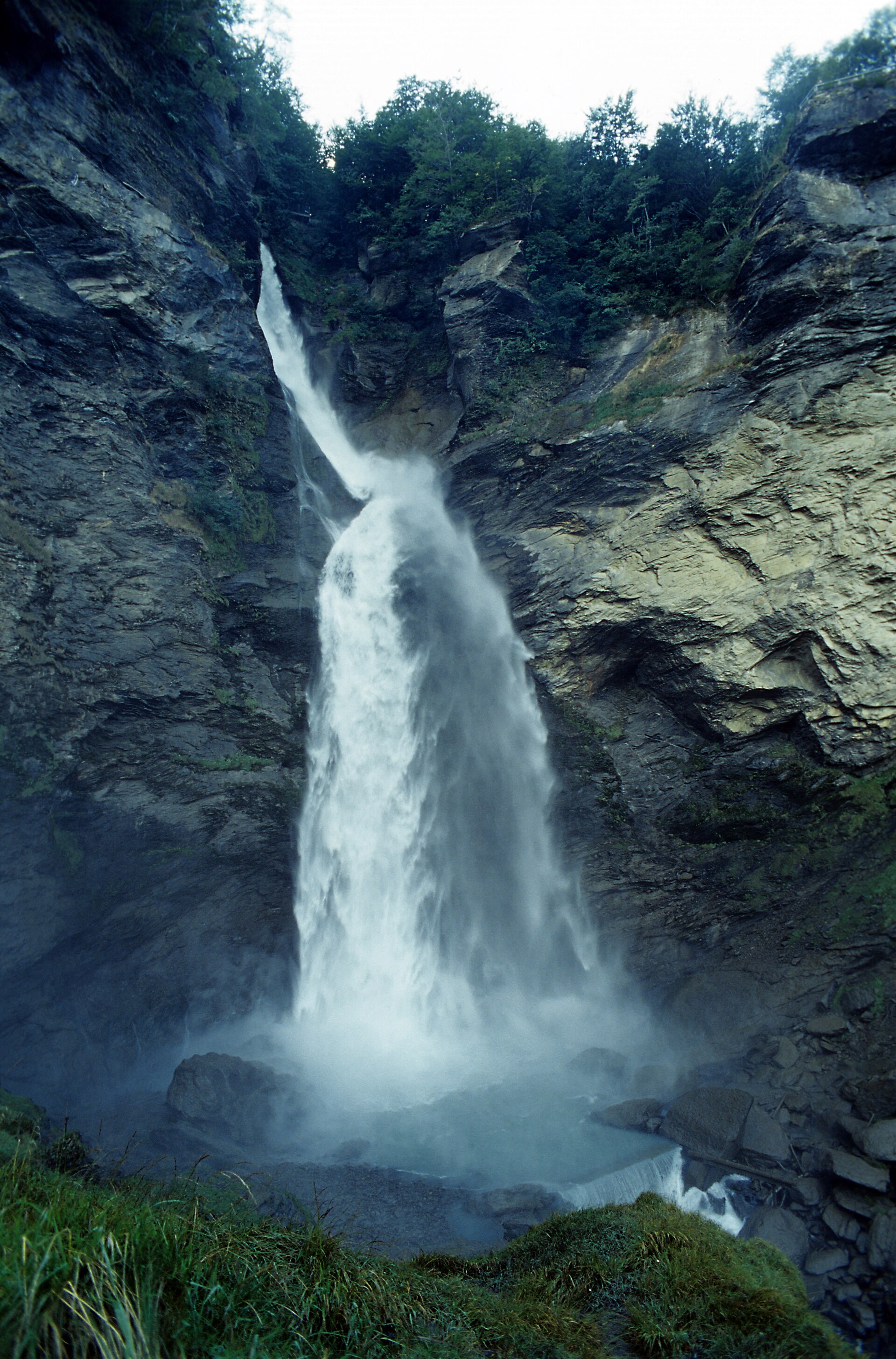
Watson, before you commit to the climb, gather the facts. The Reichenbach Falls funicular is not a modern tourist gimmick bolted onto the gorge for convenience. It dates to 1899, eight years after the fictional struggle it now serves to romanticise, and it was built to carry villagers and early travellers up a slope too steep and too wet for a comfortable footpath. Understanding its schedule, its season, and its price is the difference between a tidy half-day excursion and a wasted drive to Meiringen.
When the funicular runs: the season
The line operates seasonally, broadly from late spring to mid autumn. In practical terms, expect service to begin sometime in May and close by mid October, though exact opening and closing dates shift a little each year depending on snowmelt at altitude and maintenance schedules. There is no winter service: the lower station sits in a valley that holds snow and ice well into spring, and the upper platform, close to the falls themselves, is exposed to spray that freezes readily. If you are planning a trip outside the June to September window, check the current year's calendar before you set out. Do not assume the previous year's dates will repeat exactly.
Departure frequency and first and last runs
During the core season, departures typically run at intervals of roughly fifteen to thirty minutes, though this can tighten in peak midsummer weeks and loosen in the shoulder months of May and late September. The first ascent of the day generally leaves mid morning, often around 9am, and the last descent is usually scheduled for early evening, commonly between 5pm and 6pm. These are approximate patterns rather than fixed promises: weather, maintenance, and visitor volume all adjust the rhythm on a given day. Watson's rule applies here as it does to any investigation: verify locally rather than trust secondhand notes.
Confirm the day's first and last departure at the valley station or via the operator's posted schedule. Funicular timetables here are revised within the season, not just year to year, and a heavy rainfall can shorten operating hours without much notice.
Prices: what to expect
Fares are modest by alpine standards. A round trip for an adult generally falls in the range of 10 to 14 Swiss francs, with one-way tickets priced lower, and reductions commonly available for children and for holders of regional travel passes. Prices are adjusted periodically, so treat any figure quoted here as a working estimate rather than a receipt. Payment is usually accepted in cash and by card at the valley station; carrying some Swiss francs in small denominations remains sensible practice in this part of the Bernese Oberland, where not every machine accepts foreign cards without friction.
The ride itself: distance and duration
The funicular climbs a short but genuinely steep stretch, gaining perhaps 150 to 200 metres of elevation over a few hundred metres of track, a gradient that would make the footpath alternative a serious scramble for anyone not properly shod. The journey itself lasts only a few minutes, somewhere around five to eight minutes depending on the car's speed that day, which is brief enough that queuing at the base station in high season can take longer than the ride. From the upper platform, it is a short walk, generally under ten minutes, to the viewing points above the falls where the drop and the spray become properly audible.
Reaching the valley station
The lower station sits a short distance outside Meiringen, reachable on foot from the town centre in around 30 to 40 minutes, or by local bus in considerably less time. Travellers arriving by train usually change at Meiringen station, where connecting bus services to the funicular's base run at intervals timed loosely to match the falls' own operating hours, though it is worth double checking the bus timetable separately rather than assuming perfect synchronisation. Parking exists near the valley station for those arriving by car, with a modest fee typical in peak months.
Practical notes for the ascent and descent
Footwear matters more than most visitors expect: the upper platform and the paths beyond it are frequently damp from spray, and the rock can be slick even on a dry day lower down in the valley. Bring a light waterproof layer if you intend to approach the closest viewing points, since the falls generate their own weather at close range. Photographers should note that the midday light often washes out the gorge's contrast, so an earlier or later run, if the schedule allows, tends to reward the effort. If the funicular is closed for maintenance or weather, a walking path does exist as an alternative, though it demands sturdier footing and roughly double the time.
Elementary, perhaps, once laid out plainly: the funicular is seasonal, brief, inexpensive, and genuinely useful, but it rewards exactly the kind of advance checking Holmes himself would have insisted upon. Confirm the day's hours, bring cash as backup, and dress for spray rather than sunshine.