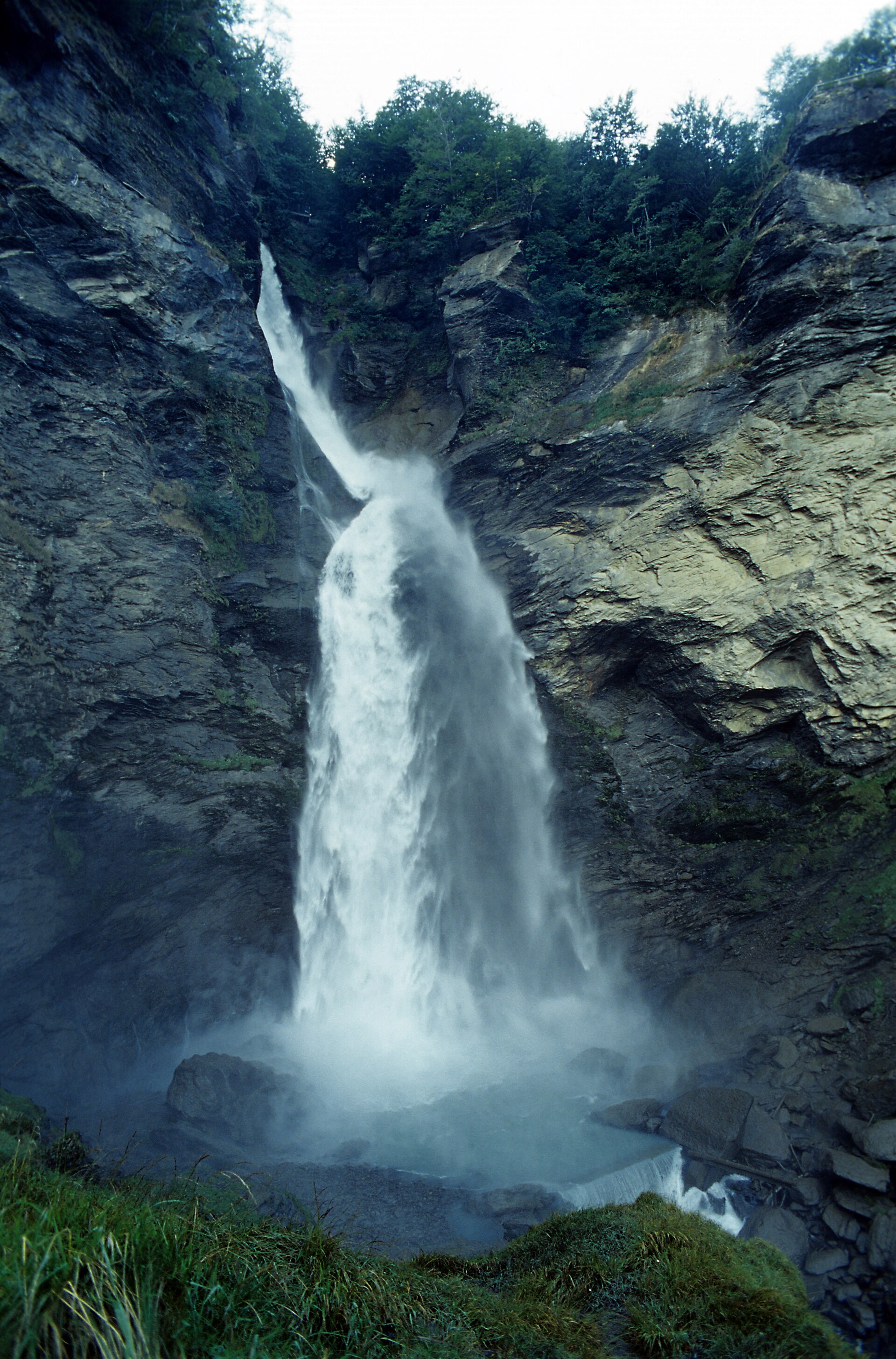
Every investigation begins with the obvious question asked properly. When is Reichenbach Falls actually worth the climb? The honest answer depends on snowmelt, funicular schedules, and how many fellow visitors you can tolerate on a narrow viewing ledge. This file lays out the seasonal evidence, month by month, so you arrive when the water is doing something worth watching.
Late spring: the snowmelt surge (May to mid-June)
This is the period when the Reichenbach earns its name as a thundering case-file rather than a postcard. Snow is still melting off the Rosenlaui valley above, and the stream that feeds the falls swells considerably. Flow is typically at its most forceful from mid-May through June, before the high glaciers stop contributing meltwater at the same rate. Expect spray that reaches the lower platform on windy days, and bring a layer that can get wet. Temperatures in Meiringen hover between 12 and 18 degrees Celsius, cool enough that crowds remain modest even on weekends.
Summer: reliable access, busier ledges (July and August)
By midsummer the funicular runs its fullest daily schedule, generally with departures every 15 to 30 minutes during opening hours, though you should always check the day's schedule before planning around a specific train. This is peak season for day-trippers from Interlaken and Grindelwald, so arriving before 10am or after 4pm avoids the thickest queues at the base station. Flow volume is still respectable, fed by residual snowmelt and regular alpine rain, though it has usually eased from the May peak. Daytime highs reach 22 to 26 degrees Celsius, and the forest path up from Meiringen is fully dry and well marked.
Regardless of season, bring a waterproof layer for the viewing platform and sturdy shoes for the gravel path. Spray carries further than it looks, elementary as that sounds.
Autumn: clearer light, thinning flow (September to mid-October)
September often delivers the best visibility of the year: clear air, golden larches on the valley sides, and a flow that has settled into a steadier rhythm rather than a spring torrent. It remains a strong month for photography, since the lower sun angle catches the spray at a better angle for a rainbow through most mornings. The funicular typically continues running into October, but its final weekend of the season varies from year to year depending on weather, so confirm dates close to your trip. Crowds thin out noticeably after the first week of September, making this a quieter alternative to high summer.
Winter: closed lift, frozen drama (November to April)
This is where many visitors miss the real story. The funicular closes for winter, generally from late October until late April, which means the upper viewing ledge is inaccessible by rail for roughly five months. Hardy walkers can still reach lower viewpoints on foot via the marked trail from Meiringen, conditions permitting, and the sight of partially frozen spray clinging to the rock face is dramatic in its own right. However, ice on the path makes this an outing for proper boots and daylight hours only, and the summit platform itself typically stays shut. If your travel window falls in winter, treat the falls as a cold-weather curiosity rather than the full experience, and pair the trip with an indoor stop such as Meiringen's Sherlock Holmes museum.
Choosing between drama and comfort
If raw power is your priority, aim for late May into June, when snowmelt pushes the greatest volume of water over the lip and the spray is at its most theatrical. If comfort and reliable transport matter more, July through early September offers the steadiest funicular service and the most predictable weather, at the cost of sharing the platform with more people. September alone tends to balance both concerns reasonably well: decent flow, clear light, and manageable crowds. For a full plan covering the ledge, the walk, and timing within a single day, the half-day visiting guide is worth reading before you go.
Pairing the season with nearby sights
Each season also shapes what else is worth combining with the falls. In summer, the Aare Gorge walk stays open and offers a cooler, shaded alternative when the midday sun turns harsh. In late spring, the glacier-fed Rosenlaui gorge further up the valley runs equally high and makes a logical extension for anyone already chasing meltwater drama. Whichever month you choose, book accommodation in Meiringen or Interlaken with the season's crowd pattern in mind, since July and August rooms disappear fastest; the site's where-to-stay guide breaks down the trade-offs between the two bases.
The case, Watson, resolves itself with proper timing rather than luck. Match your visit to what you actually want: thunder, convenience, or quiet light, and the falls will not disappoint.